Chief of War & How Cultural Storytelling Should Shape Hawai‘i Tourism
A personal reflection on the premiere, kuleana, and how stories shape the future of travel in Hawaiʻi.


Search For Tours
Guest blog by Kamerya Hanohano – a Māori, Hawaiian, and Samoan filmmaker, cultural storyteller, content creator, and advocate for responsible tourism. She shares personal reflections from the ‘Chief of War’ premiere and show, representation, and how visitors can experience Hawai’i with more care.
This guest post blends my personal experience at the Chief of War red carpet premiere with insights on how to visit Hawai’i more mindfully.
It’s part red-carpet moment, part travel reflection – touching on storytelling, kuleana, and local-led travel. Because when you see what’s beneath the beauty, the way you experience Hawai’i shifts too.
There’s something vulnerable about watching a story that feels personal told by people with global reach. Especially when it’s about your home, your people, and your language.
Chief of War delivered a cinematic drama and brought ‘õlelo Hawai’i to the forefront, reminding me of my kuleana, and offered something rare: a chance for visitors to see Hawai’i before they even arrive.
How the Chief of War premiere brought Hawaiian culture to life.
The Chief of War red carpet premiere took place at Ko Olina Beach Park, with security provided by some of the biggest local men I’ve seen, presence alone enough to set the tone. Your name had to be on the list. ID checked at the gate. The whole thing felt intentional, almost ceremonial. Like the space was being protected, not just managed.
Right as you walked in, the smell of garlic shrimp and furikake-dusted poke greeted you like an aunty handing you a plate before you even sit down. And yes, it was free. Everything was free. Food everywhere. Unlimited. That kind of abundance already felt Polynesian.
Plates were from Da Bald Guy, Sam Choy, MW Restaurant, Hawaiian Pie Company and more, some of the best to ever do it.
The crowd was dressed in culture, literally. ʻIe lavalava, puletasi, deep jewel tones, polynesian patterned jackets, bone and shell jewelry, ula. Polynesian creators like Louis Davis, Poly Diva, and Island Mike were there, alongside the cast of the show, all moving between interviews, hugs, and cousins calling out each other’s names from the crowd.
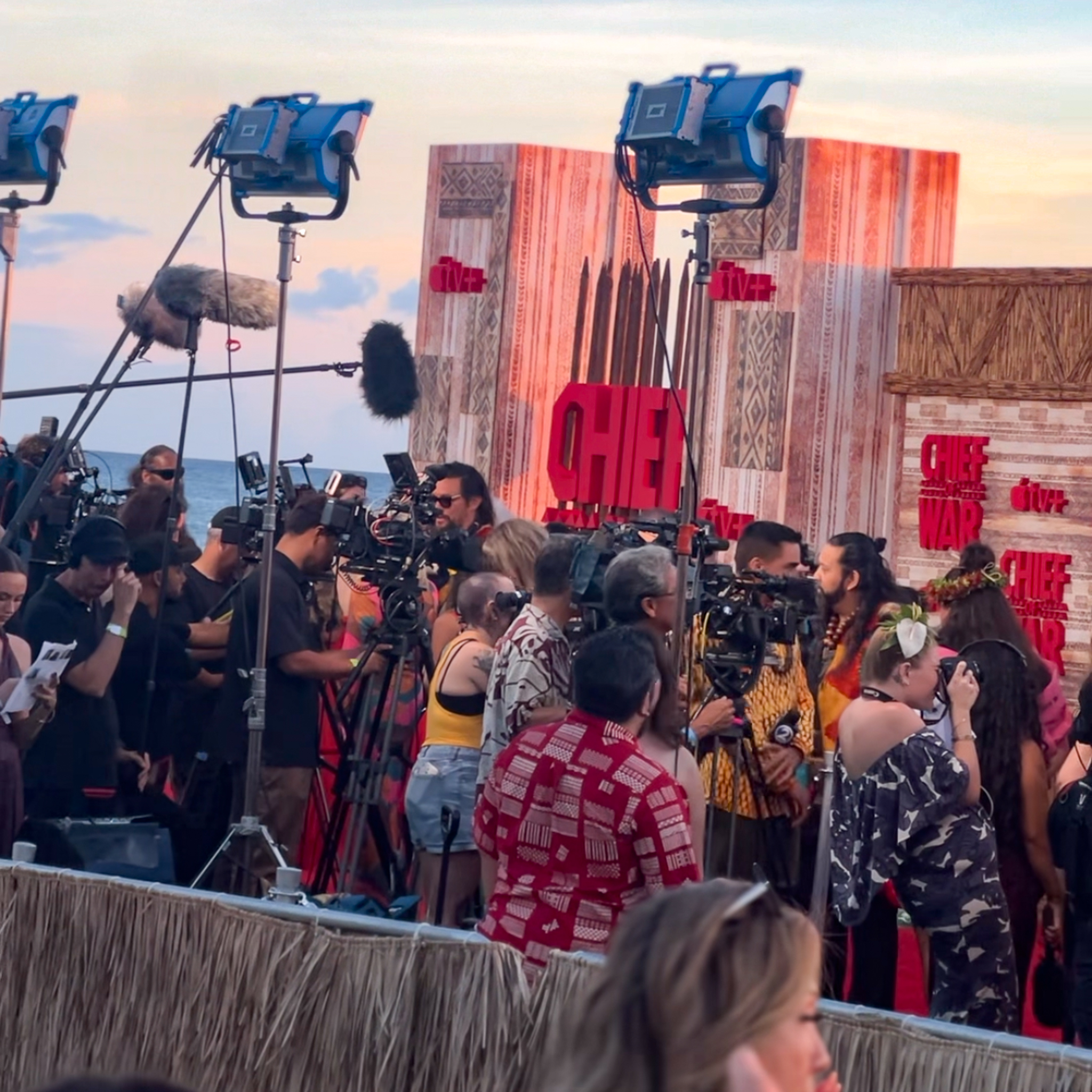
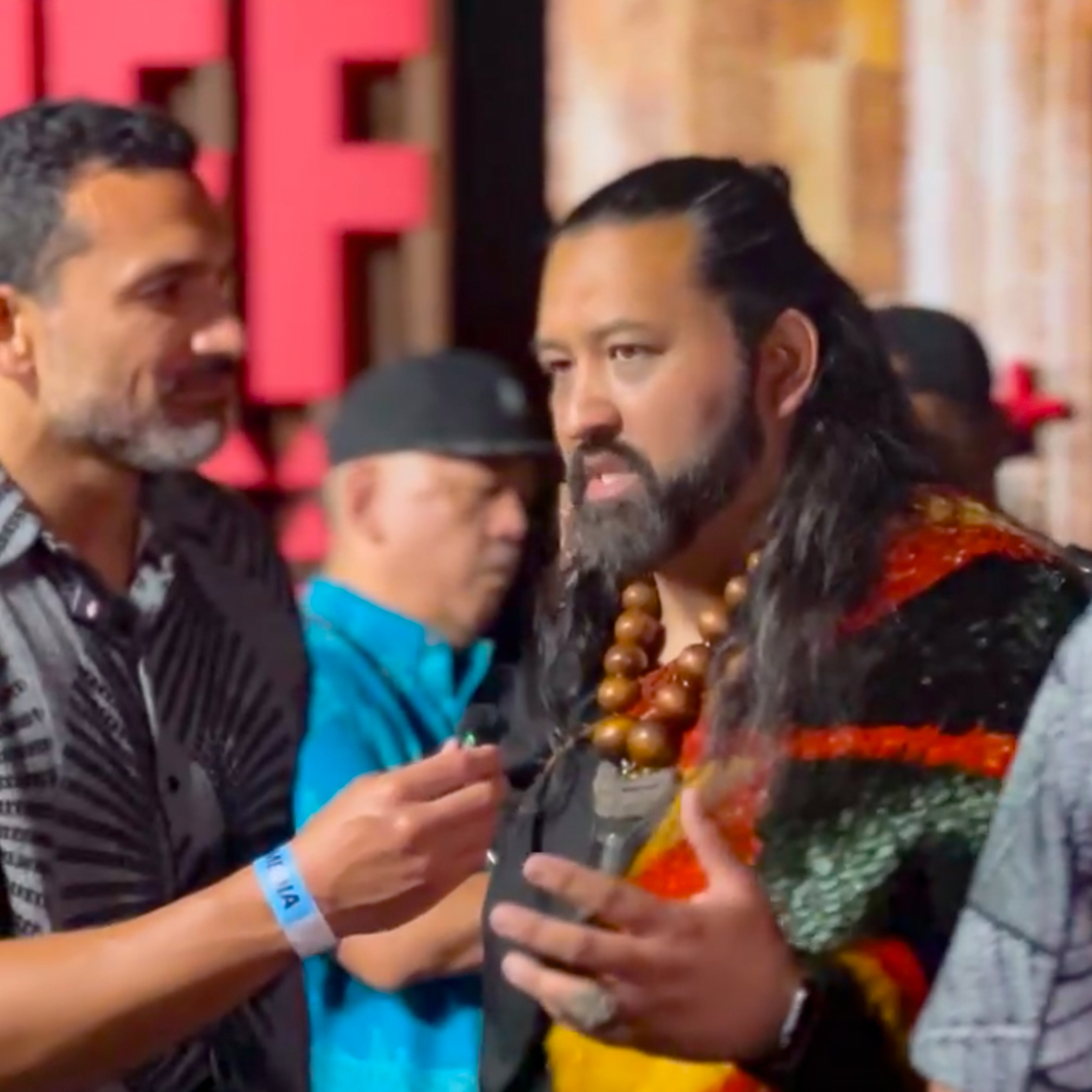
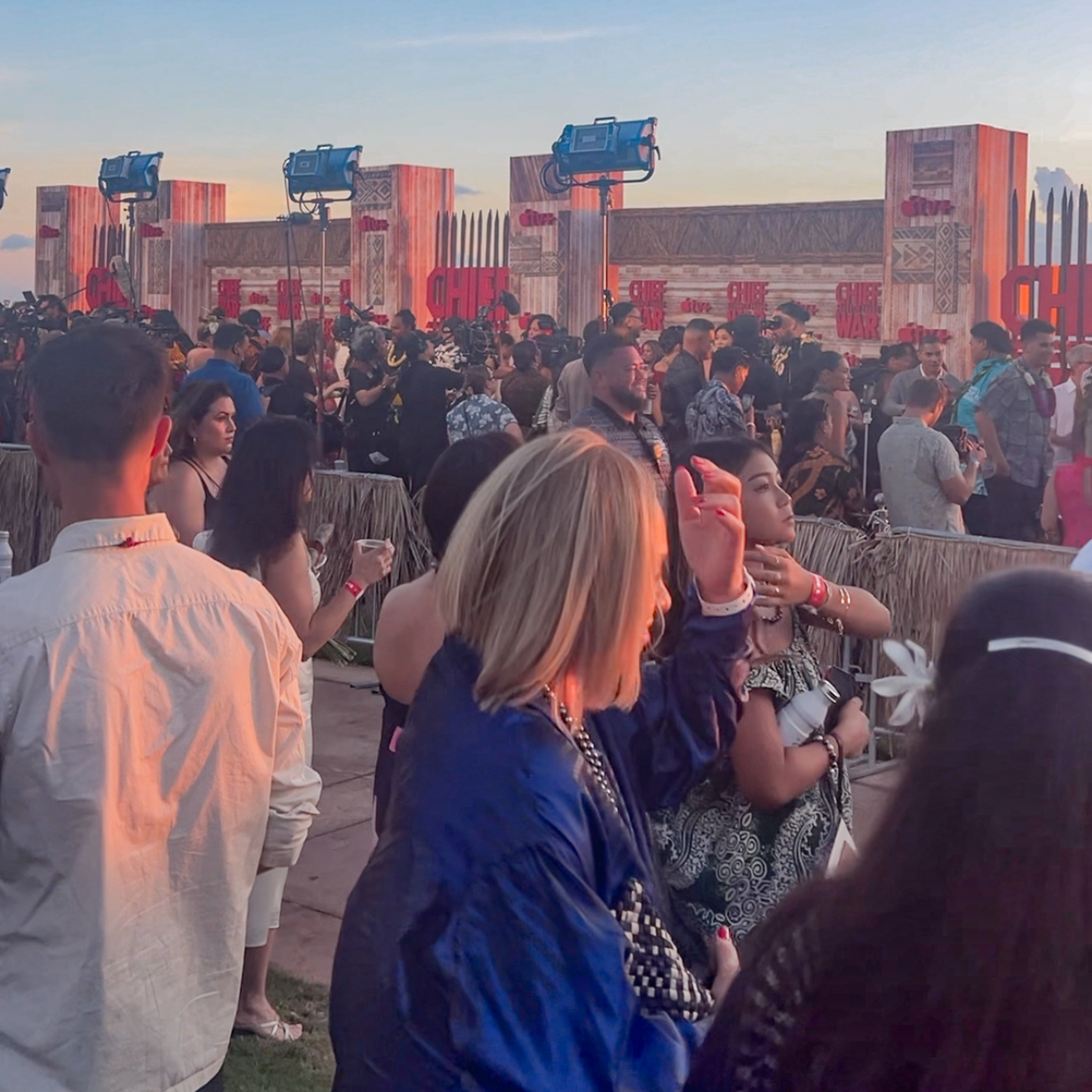
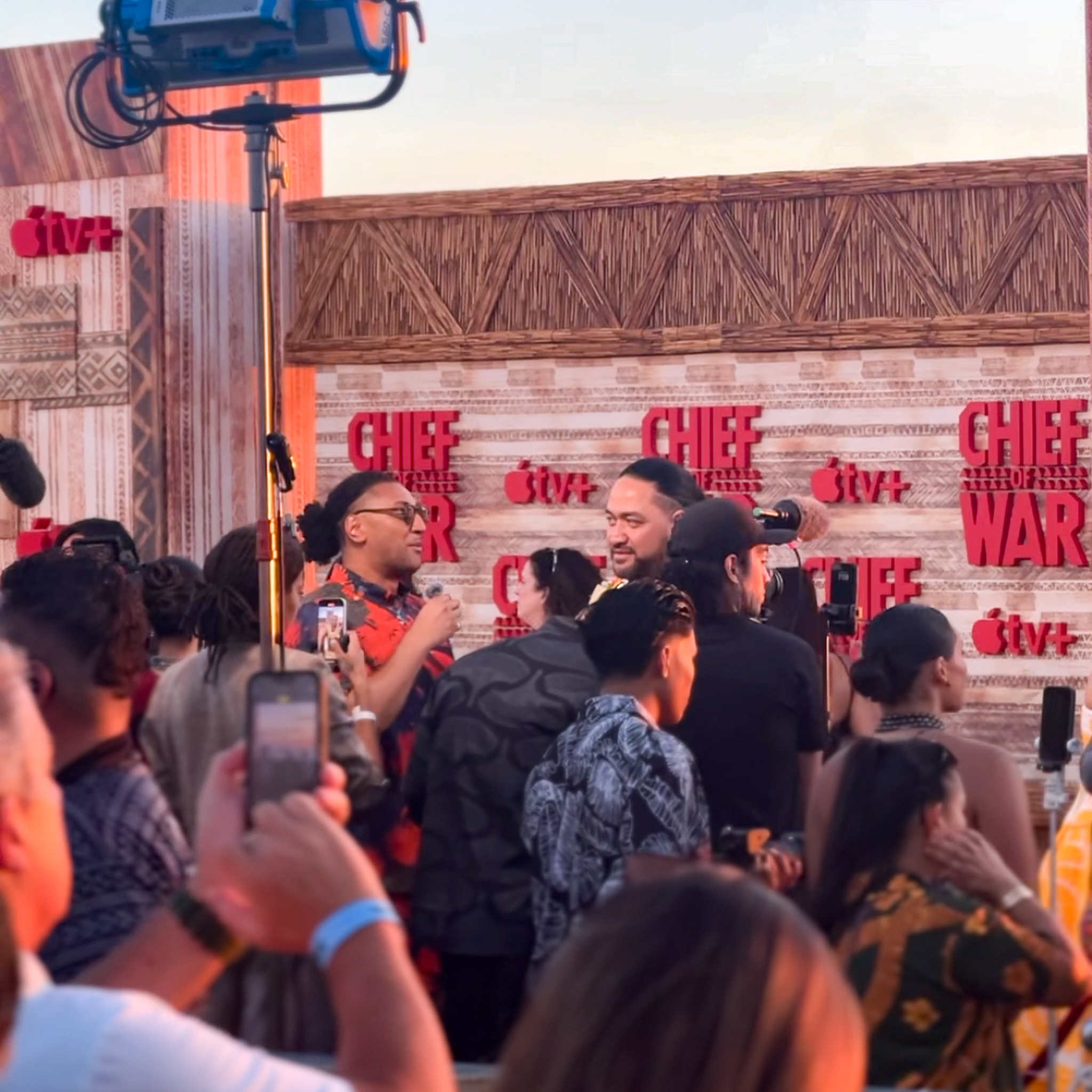
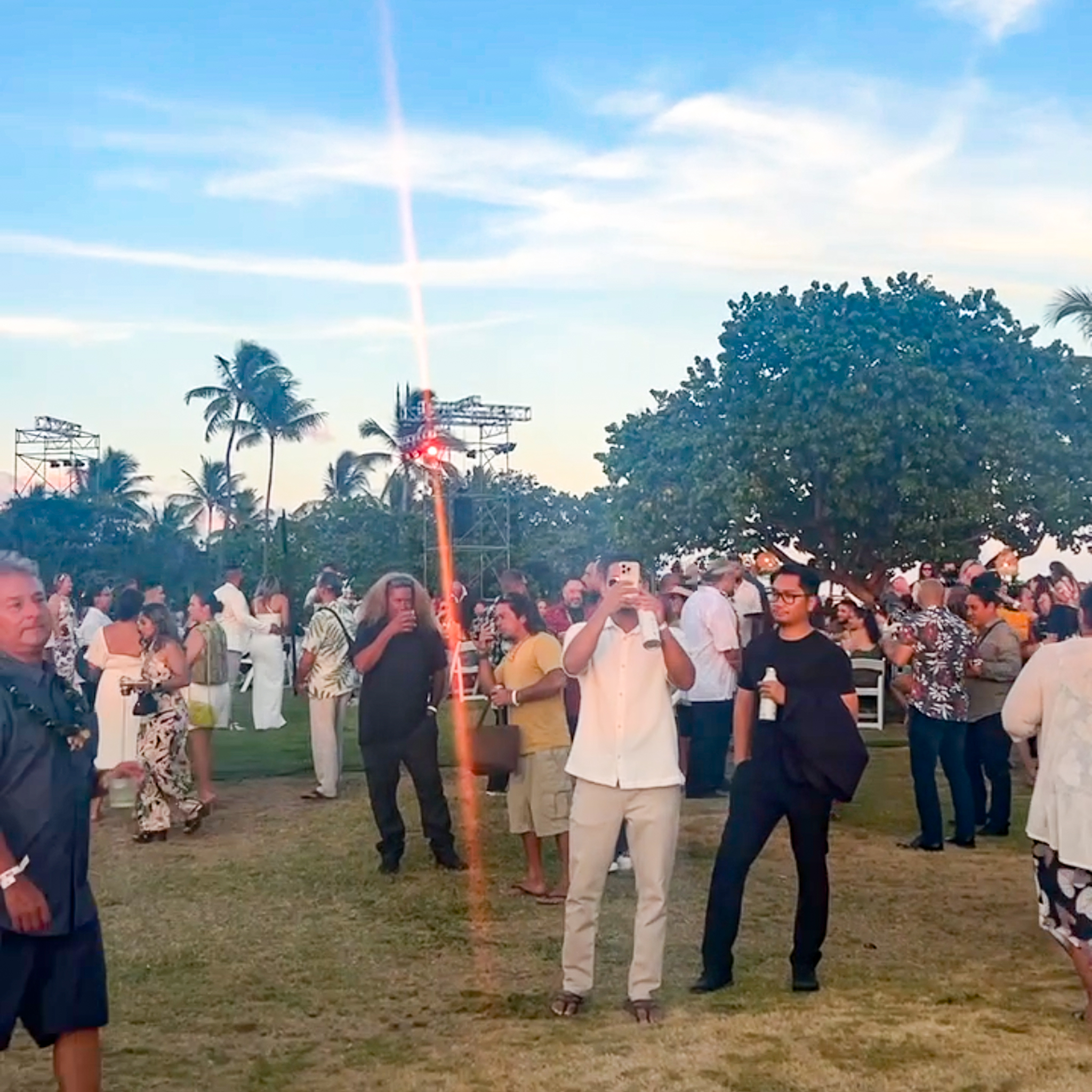
The red carpet itself was bold and bright with Chief of War lettering to match the red it rolled over. Reporters filled one side of the carpet, while the cast mingled without much order. Just beyond the ropes, phones were raised in nearly every hand, recording the moment from every angle. There was a kind of movement, chaos even, but beautiful. Familiar. The kind where everyone knew someone. That’s what I loved most about it: it certainly wasn’t just an exclusive invite-only premiere. It really felt like a family gathering in disguise.
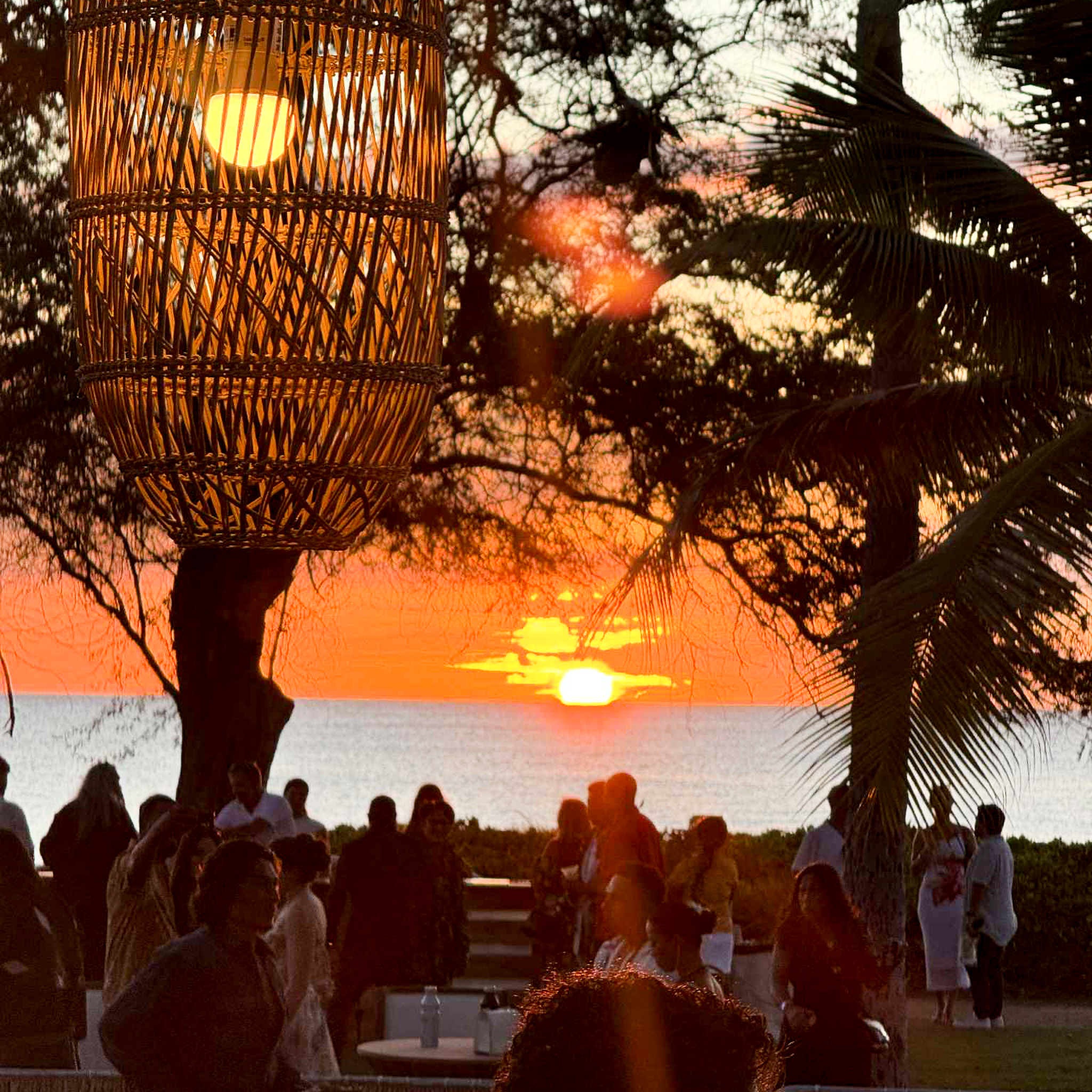
Hundreds of white chairs were lined up in front of the giant outdoor screen, and before the screening started, we were given what only Hawaiʻi could offer: performances by Josh Tatofi, Kalani Peʻa, and both men’s and women’s local hālaus, bringing hula to the sand under sunset.
It looked like pride. It looked like history being honored, before the story even began.
As we waited for the screening to begin, I remembered a review I’d come across earlier in the week:
— The Guardian, 2024
That’s exactly what I hoped for: a story rooted in us, but wide enough to reach beyond us. Something grounded in ʻike Hawaiʻi, but cinematic enough to hold the world’s attention without losing itself.
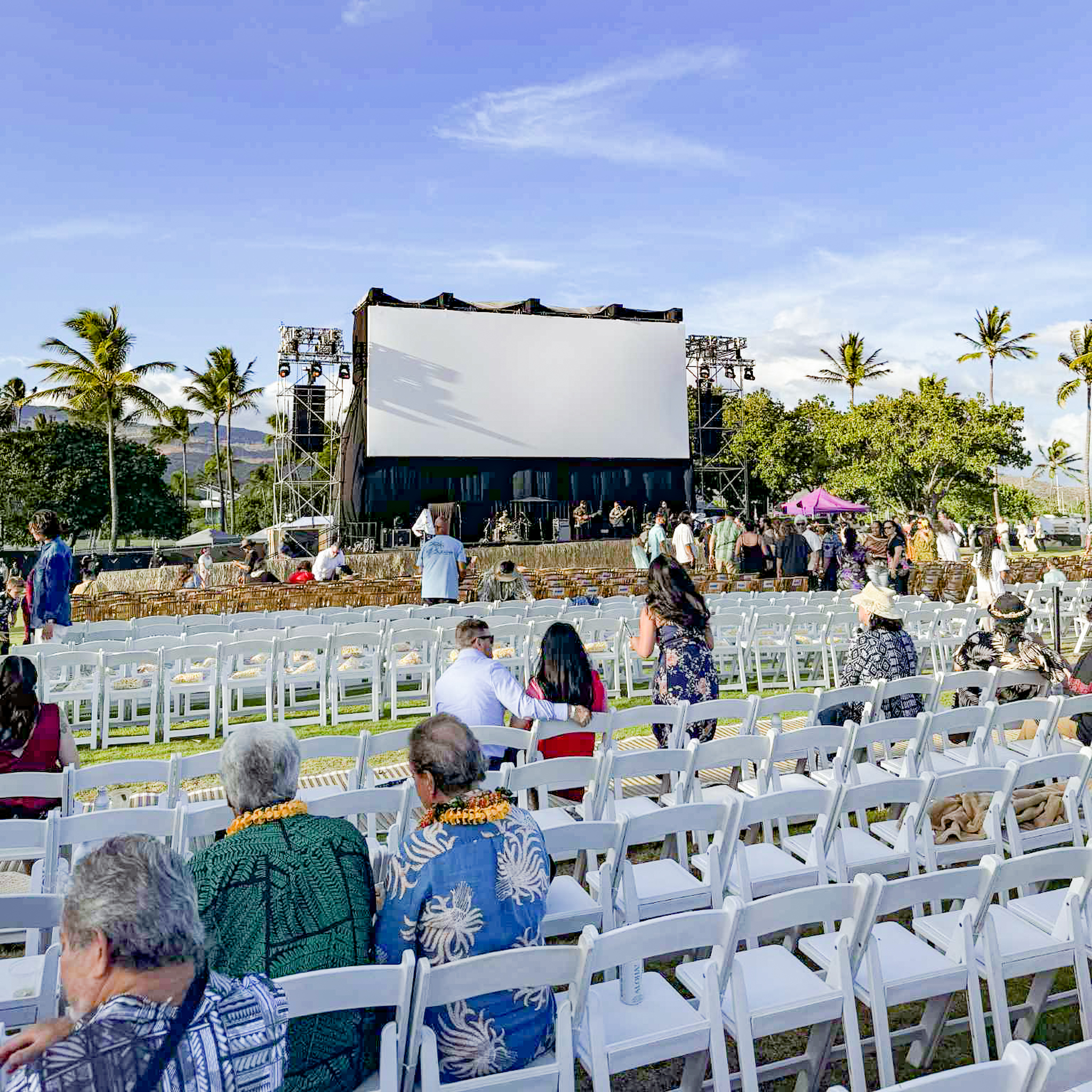
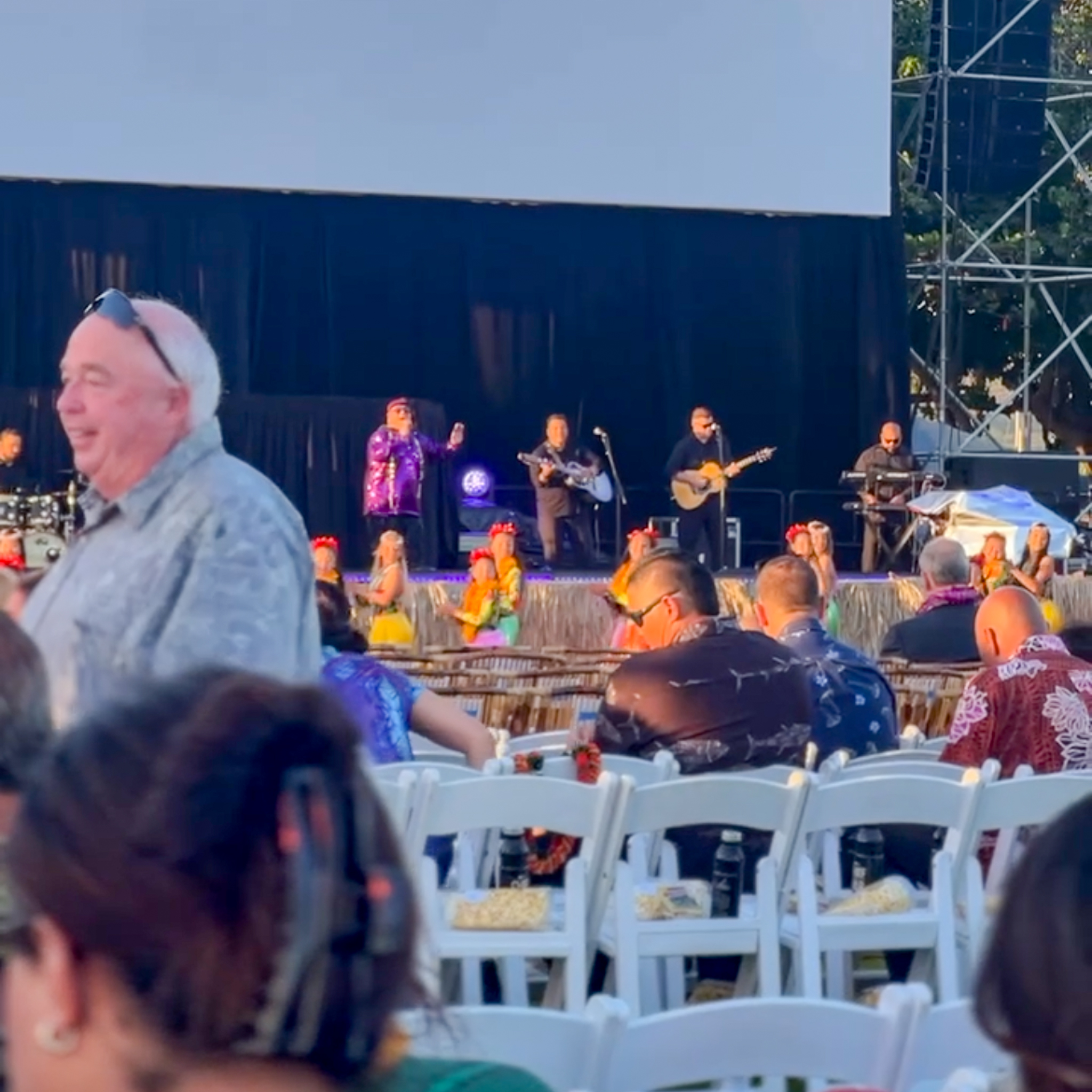
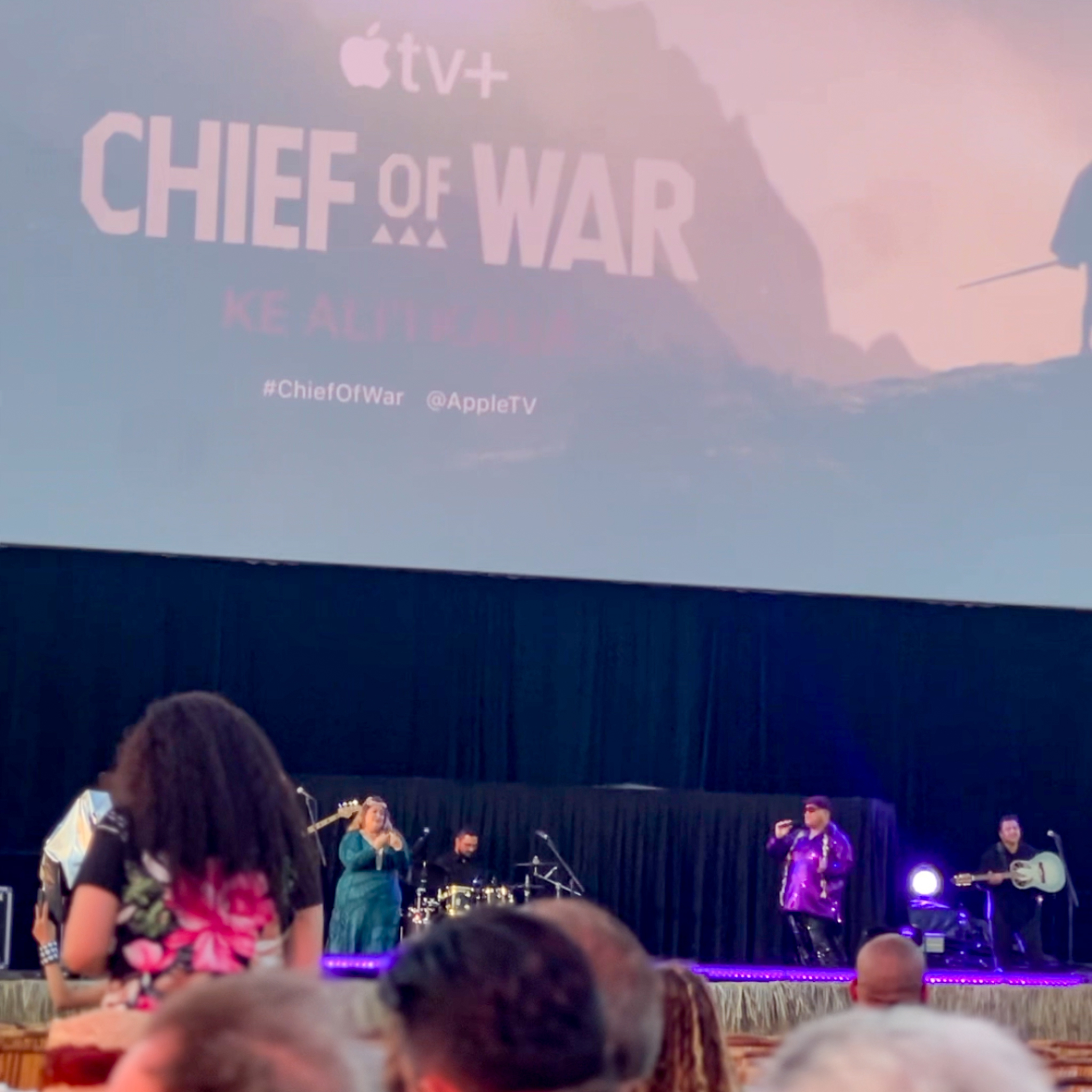
Hawaiian Ceremony & Opening Protocol at the Chief of War Red Carpet
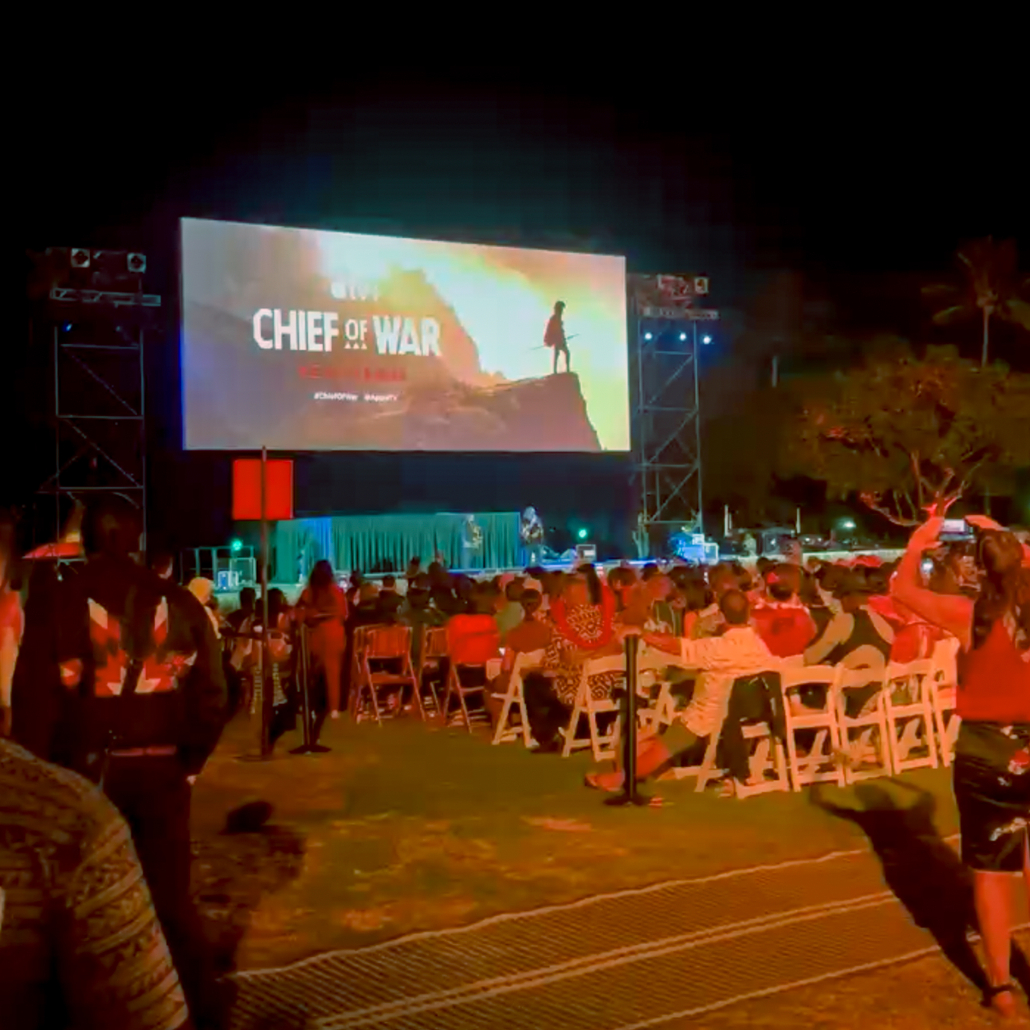
Around 7:45 p.m., they asked us to find our seats, the screening was about to begin. But it didn’t feel rushed. Everyone around me shifted gently, strangers moving to make space for each other like cousins at a family function. A woman with a baby carrier asked if she and her husband could sit next to me, and I moved over gladly. There was this shared sense that we weren’t just there to watch something, it felt like we were entering something together instead.
I looked to my left and see Cliff Curtis, who plays Keōua in later episodes, standing with security near the front, scanning for an open seat. Just beyond him, Iam Tongi, American Idol Season 21 winner, stood near the beverage station, casually taking pictures with fans. No spotlight, no ego, just part of the ‘ohana.
A few rows ahead, I spotted the co-creator’s family. Some familiar faces from past jobs. I watched his wife walk toward her seat, surrounded by people I didn’t know but the energy was warm. Familiar in its own way.
Then the opening ceremony began.
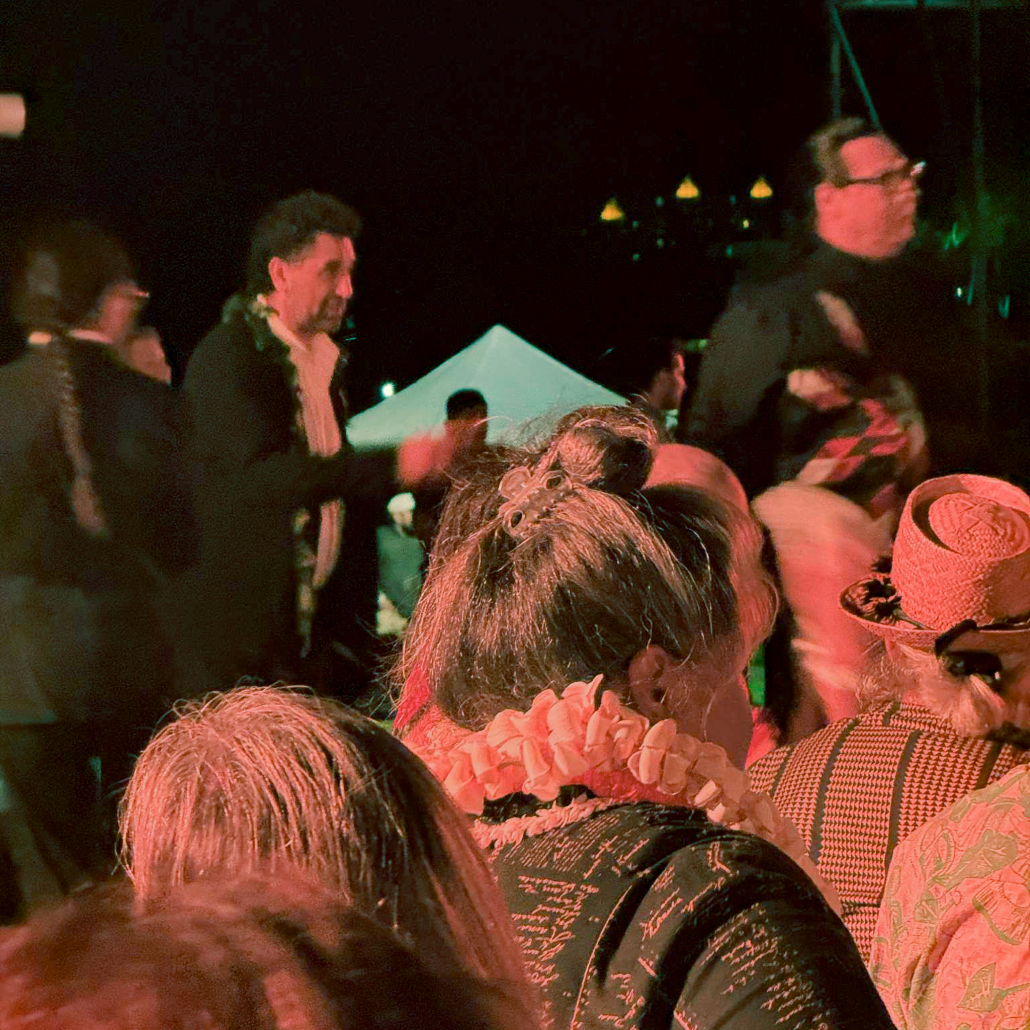
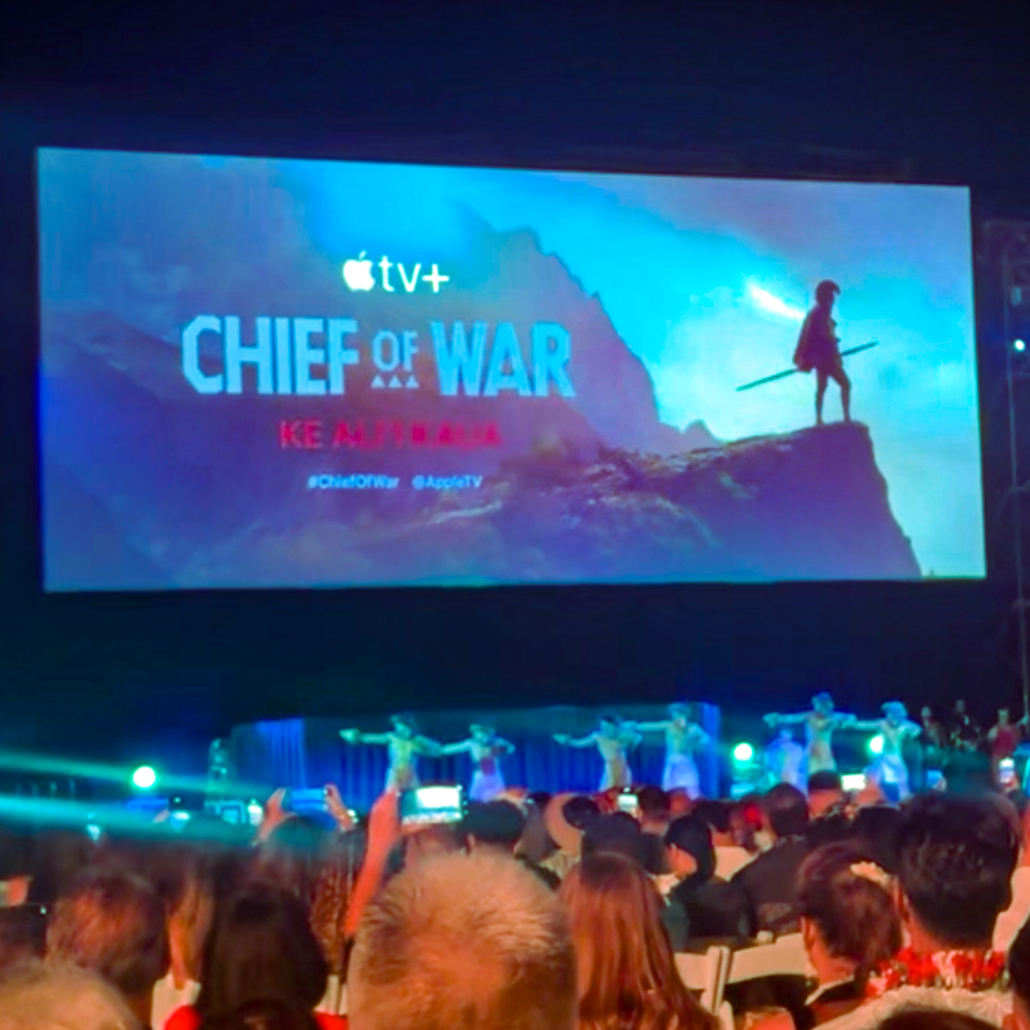
Kumu Hinaleimoana Wong stepped forward to offer an oli. Her voice rose not loud, but impossible to ignore, cutting through the noise of flashbulbs and quiet conversations. In that moment, the space shifted. It felt like a calling-in. A clearing.
What followed wasn’t entertainment, it was protocol. Chants, mele, and hula offered with intention, not performance. All happening under the open sky, held by the land.
The screen behind them hadn’t even lit up yet, but the story had already begun.
Polynesian Power on Screen
You watch the first five minutes and witness pure presence, an introduction to the strength of Native Hawaiian people, and to me, a powerful reminder of the strength of all Polynesian peoples. I won’t spoil it here, but when you watch the first two episodes on Apple TV+ this August, you’ll understand what I mean.
In those first few minutes, I felt something settle into place: pride, mana, recognition. The scene moved like ceremony that was intentional, rooted, and alive.
And then came the sound.
The screen faded to black. Then the sound of ‘ōlelo Hawai’i chanting rose through the speakers – layered, resonant, and ancient. It vibrated in the chest before the ears could even catch every word. And then Hans Zimmer’s theme swept in, orchestral and cinematic but somehow rooted in us.
And then came the claps.
The ‘chee-hoos.’
The shouts from somewhere near the back that rolled forward like waves.
The crowd wasn’t separate from the story…we were part of it.
Seeing Hawaiʻi Through Local Eyes: What Changes When You Know the Story
One of the first scenes opens in Kaupō. That place holds deep meaning for me because my ancestors are from there.
As the episode continued, I recognized more names, more landscapes. Not just places I’ve spent time in, but places my husband is deeply connected to. He’s a Road to Hāna tour guide, ancestral connections rooted in Hāna and a descendant of King Piʻilani.
Kaupō kept tugging at me – wind-carved coast, land to cliff. My Kahalua roots from Hāna and Lāhainā make those names feel like home. In Hāna, my husband’s ʻāina, the old coastal trail still runs – first walked by his kūpuna, later linking moku to moku. On tour he shares names, protocol, and the quiet details brochures skip. Piʻilanihale Heiau rises from that same landscape, a stone ledger of the Piʻilani line and a living lesson in kuleana, felt in the loʻi, the ʻauwai, and the way community still holds the coast together.
In his family’s mo’okū’auhau (geneology) – a typed lineage for the Palake/Haohano ‘ohana that traces back to the Royal house of Moana – Pi’ilani and La’ieloheloheikawai’s line runs through their daughter Kalā’aiheana, to her son Moana-kāne-kuhi-a-‘ili, then ‘llikia-Moana and the Royal House of Moana, and onward through Palake I and II into the Hanohano line. It reads like history but feels like home – Hāna’s cliffs and coves, the coast my husband would guide visitors to every week.
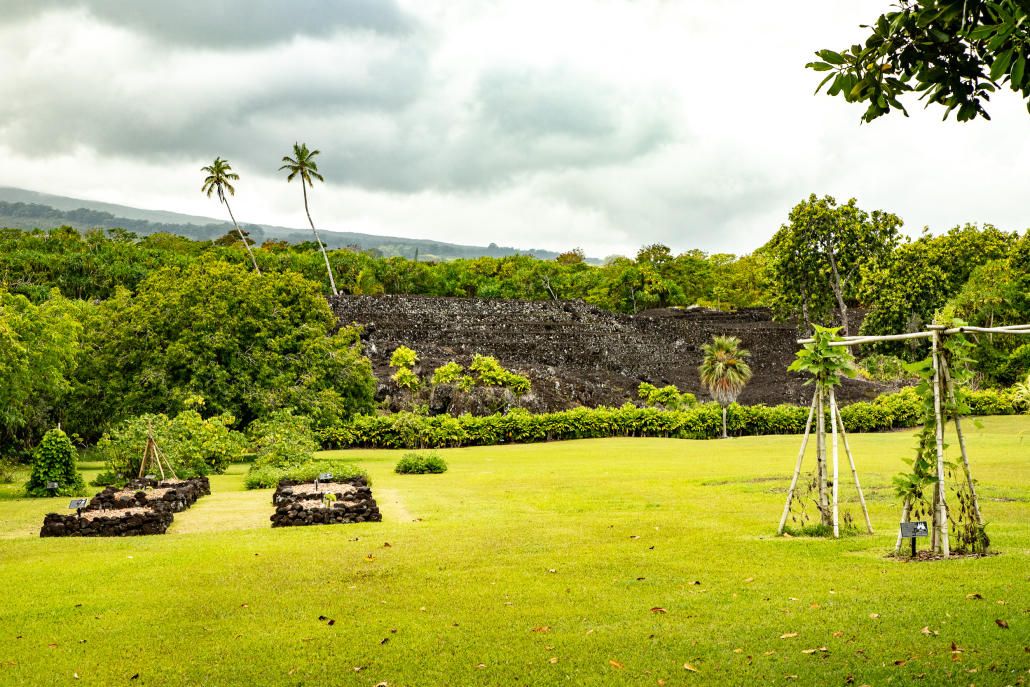
Piʻilani Heiau in Hāna, Maui – one of Hawaiʻi’s largest ancient temples, built in honor of King Piʻilani, whose legacy of leadership and unity echoes through Hawaiian history.
Piʻilani’s legacy is all over Maui – Alaloa Kīhāpīlani (King’s Highway) once linked the island’s districts, and Pi’ilanihale Heiau still stands in Hāna – along the same coastline my husband knows best.
As much as the Chief of War show honored this place, I keep thinking about a day in a hotel parking lot when my husband watched a non-Native guide from another company stage a “Hawaiian ritual” he’d made up, teaching a chant on the fly and directing guests to perform it. Tears hit my husband’s eyes before the heat rose in his chest. Protocol isn’t props. ʻOli (chant) and pule (prayer) are learned, permitted, and carried by lineal families and cultural practitioners; done without consent, it turns something sacred pilau. Chief of War shows ceremony with advisors, language, and context, on screen it moves the story; off screen, it belongs to real people with real kuleana. Tourism should mirror that same care.
All of this is why the show hit different for me. It was much more than just “recognizing locations.” It was seeing a map of responsibility, places that raised our families, fed our ancestors, and still ask us to move through with respect.
When those lands came on screen, it felt layered: personal, ancestral, and collective, all at once.
Consort: Laʻieloheloheikawai; era of unification.
Daughter of Piʻilani & Laʻieloheloheikawai.
Spouse: Piʻilani-Kapō
Spouse: Kauhi-a-Haki
Spouse: Nohomuʻolani Pālia
Son of Palake I; spouse: Hoʻai (Jennie)
Spouse: Kamanohaua
Spouse: Paaluhi Punikaia
b. 12 Aug 1898; m. 16 Jun 1921; spouse Stella Irene Kalikookalani Piʻianaia (b. 16 Jun 1899)
b. 4 Jul 1927; m. 8 Oct 1948; spouse Ursula Queenie Keonaona Ho (b. 16 Jul 1929)
moʻokūʻauhau — genealogy
moku / ahupuaʻa — land districts/divisions
kuleana — responsibility
mauka / makai — toward the mountain / sea
kūpuna — elders/ancestors
pilau — foul/rotten; figuratively, disrespectful or corrupt behavior
moʻolelo — story/history/account; place-based narratives passed down in a community
kamaʻāina — local/resident familiar with a place; not the same as Kānaka ʻŌiwi (Native Hawaiian)
I was reminded how much history lives in the places we stand. It’s easy to miss if you’re moving too fast, but when you know even a little bit of what came before, the experience shifts.
It’s like visiting Pearl Harbor, not just to see it, but to feel the gravity of where you’re standing. To realize you’re walking where soldiers once stood.
And it reminded me: we don’t just visit places in Hawaiʻi.
We walk through living history.
Before your next trip, take time to learn the stories of the places you’ll visit. Try this Local Language Guide or join a Hana Road Tour led by locals.
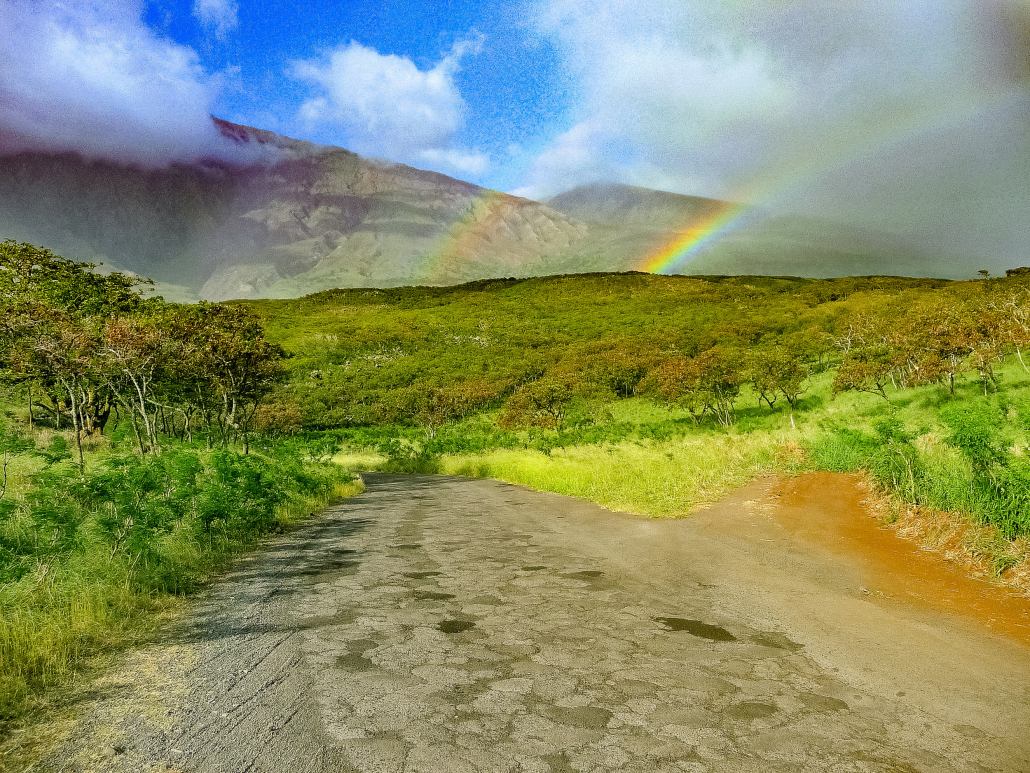
Whether it’s the road to Hāna, the summit of Haleakalā, or the grounds of Pearl Harbor, what’s under our feet matters.
And when we prepare people with care, they begin to notice.
They move slower. Ask better questions. Listen more.
That’s what Chief of War affirmed for me.
If people can hear ʻōlelo Hawaiʻi before they even land here, if they catch even a glimpse of what’s beneath the beauty, they might arrive differently.
Why Local Storytelling and Kuleana Matter in Hawaiʻi Tourism
Kuleana, to me, means understanding exactly what I’m rooted in when I share Hawaiʻi with others. That night at the Chief of War premiere, I felt it more clearly than ever.
This kind of storytelling inspires and invites responsibility. It holds truth.
And it reminded me exactly why I do this work, and who I do it for.
The stories we share through local-led tours, the way we guide guests across sacred places like Haleakalā or along the Road to Hāna, the way we welcome, it’s all part of a larger narrative. It’s not separate from the culture. It is the culture, when done with intention.
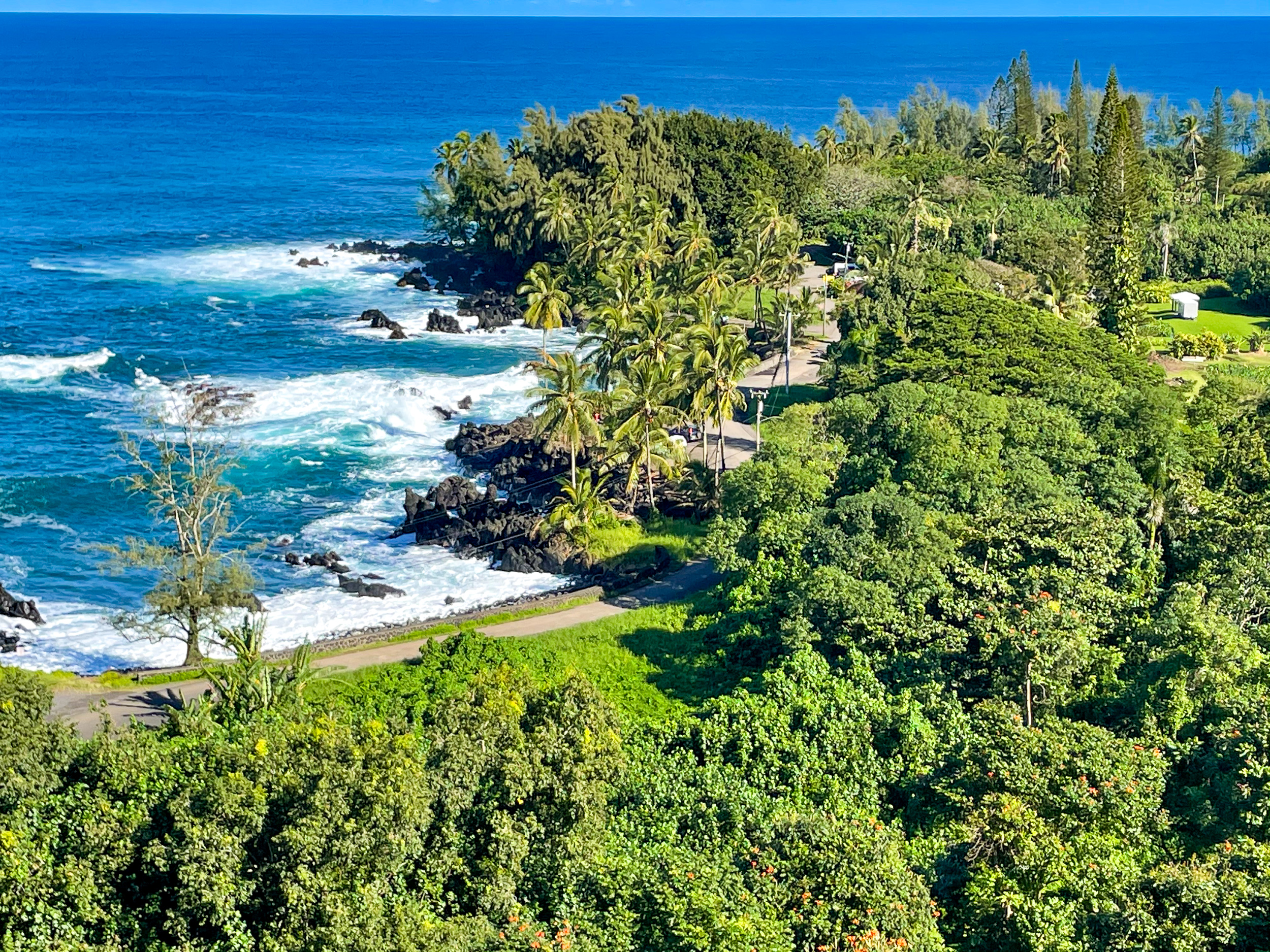
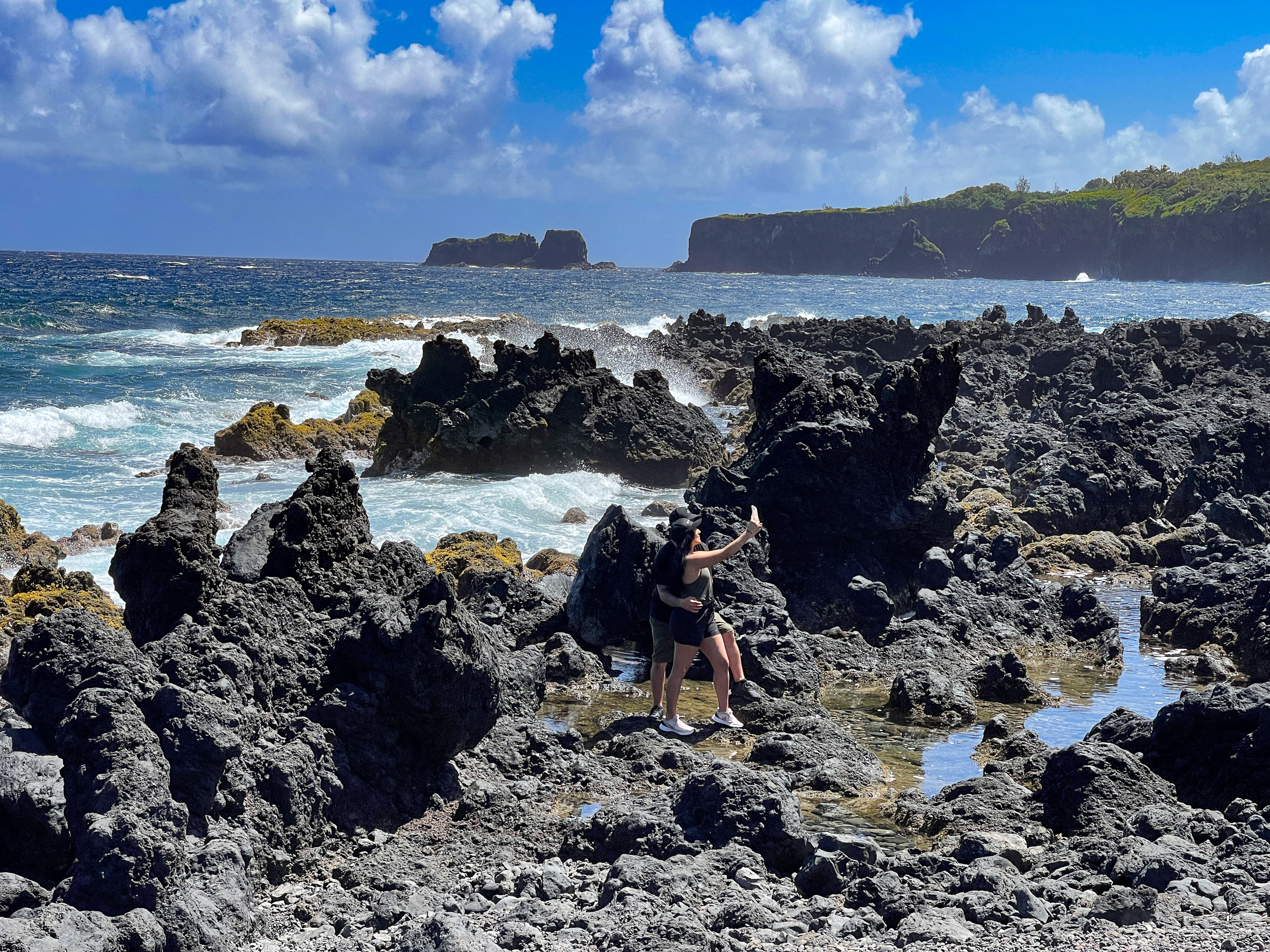
Hearing ʻōlelo Hawaiʻi fill nearly every scene, unapologetically and untranslated, was a reminder of how deep the work must go. It can’t be decorative. It’s essential.
It deepened my desire to learn, carry, and protect what we share, especially in a space like this, where Hawaiʻi’s culture and tourism intersect every day.
For years, Hawaiʻi has been packaged and sold as paradise without people. Beauty without history.
But this story reminded me: we are not the backdrop. We are the heart.
When guests are given even a glimpse of that, through language, story, or place, it stays with them.
They move differently.
And that matters.
Watching Chief of War reminded me that stories matter, especially before your plane even lands. If you’re visiting Hawaiʻi soon, here are a few simple (but powerful) ways to travel with more connection: